












How to Choose Outdoor Furniture for Comfort, Fit and Durability
- by MIMO Living
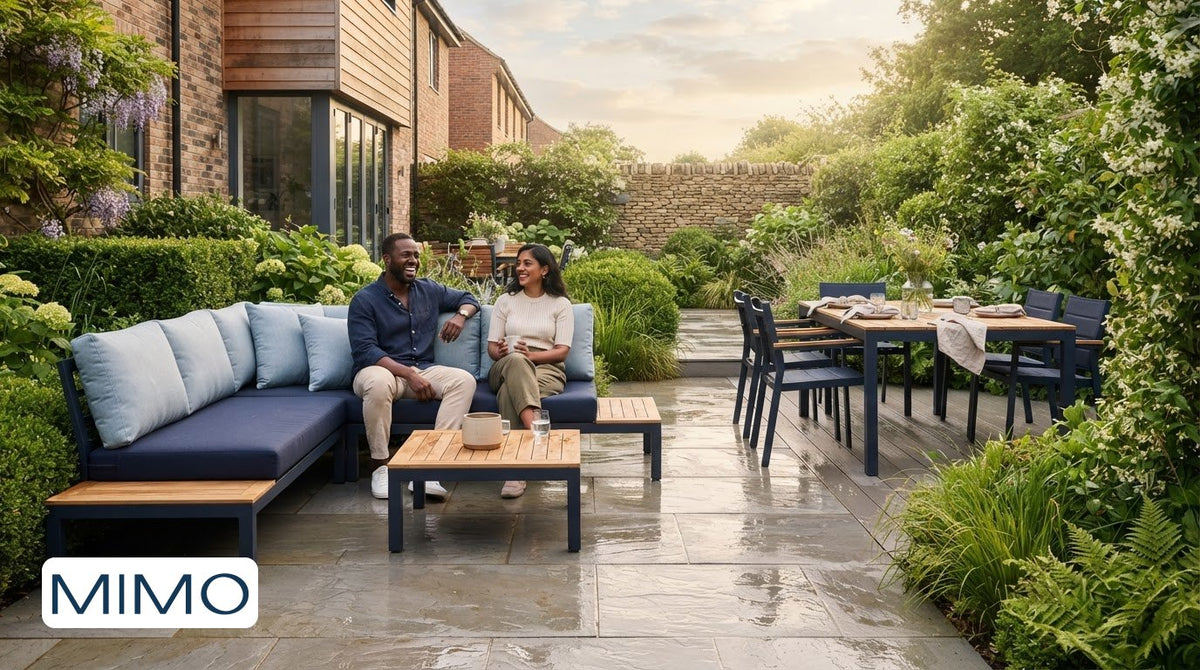
British weather should shape your choice of outdoor furniture from the start. Knowing how to choose outdoor furniture that lasts means prioritising materials suited to rain, damp, frost and strong sunlight, then matching the furniture’s proportions to your comfort and available space. A well-planned layout should feel inviting without making the garden difficult to move around.
It’s natural to focus first on appearance, but lasting comfort depends on more than a beautiful finish. The right materials, supportive construction and a layout suited to how you dine, relax or entertain all matter. In the UK, it also pays to consider how furniture will cope with changing conditions throughout the seasons.
This guide explains how to compare weather-resistant materials, assess comfort and construction, measure your space and plan for everyday use. You’ll also find practical care advice to help your outdoor setting feel considered and comfortable season after season.
Key Takeaways
- Choose materials and finishes suited to British rain, damp, frost and sunlight, and consider how much upkeep you’re happy to do.
- Start with how you’ll use the garden, then choose seating and dining furniture that fit without crowding the space.
- Assess seat depth, back support and proportions so your furniture feels comfortable for both relaxed lounging and outdoor dining.
- Measure the full furniture footprint, including space to move around chairs when they’re pulled out.
- Protect cushions from damp and keep furniture looking its best with seasonal cleaning and suitable storage.
1. Weather-resistant outdoor furniture materials
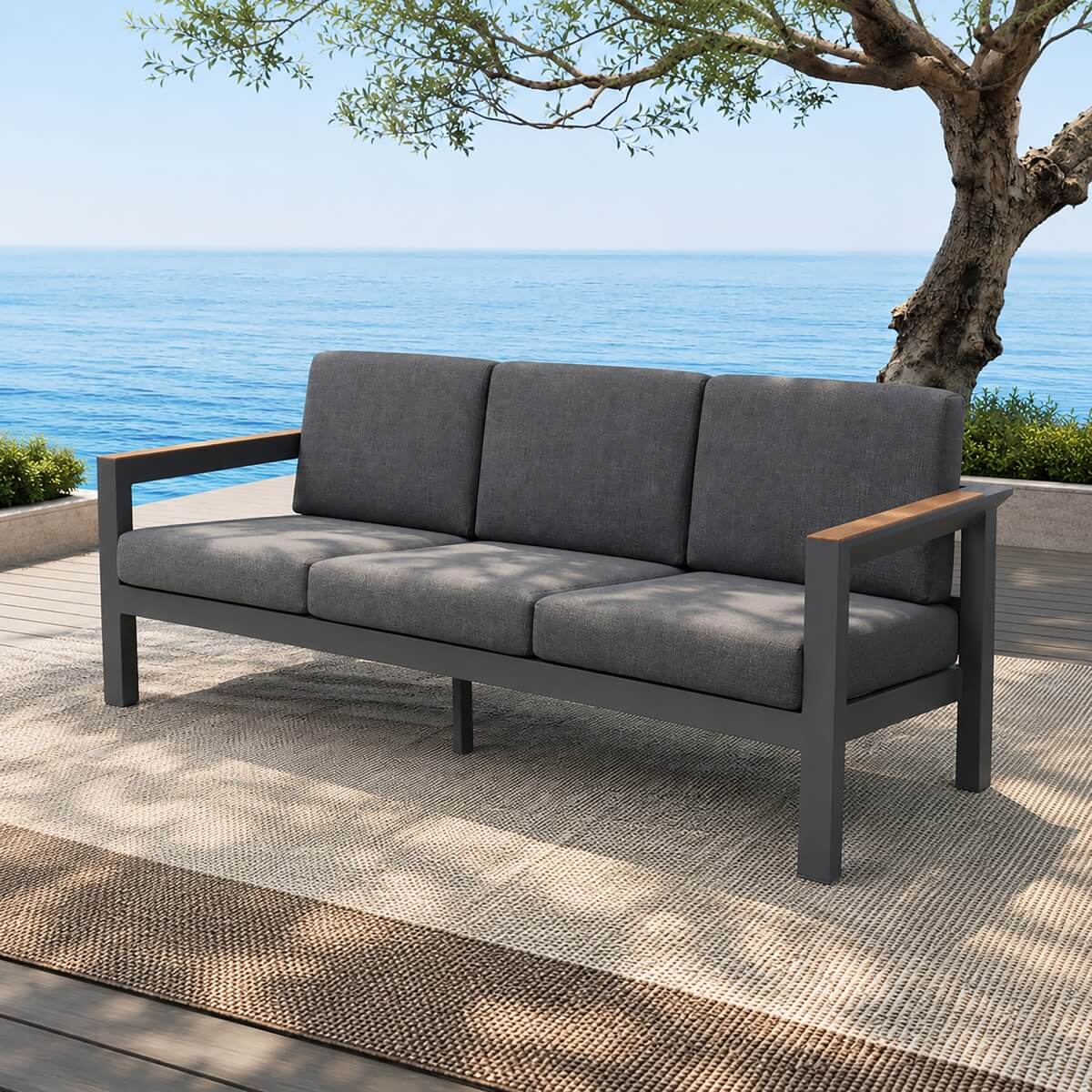
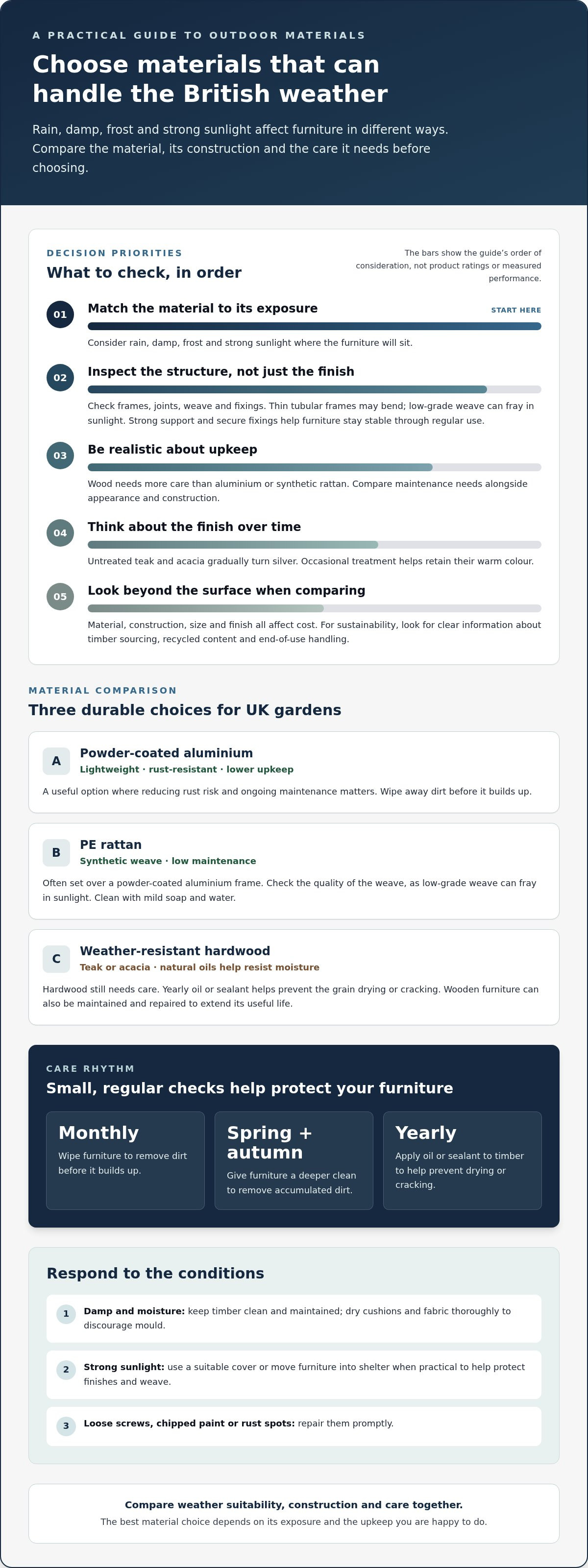
For UK gardens, durable choices include powder-coated aluminium, PE rattan and weather-resistant hardwoods such as teak or acacia. Aluminium is light and rust-resistant; PE rattan is a low-maintenance synthetic weave, commonly set over a powder-coated aluminium frame. Hardwood contains natural oils that help resist moisture, although it still needs care.
Match the material to its exposure. Rain, frost, damp and strong sunlight can affect outdoor furniture differently, so inspect the frame, joints, weave and finish, not just the surface. Thin tubular frames may bend, while low-grade weave can fray in sunlight. Strong structural support and secure fixings help furniture stay stable through regular use. Untreated teak and acacia gradually turn silver; occasional treatment helps retain their warm colour.
Wood requires more upkeep than aluminium or synthetic rattan. Pressure treatment drives preservative deep into timber, helping protect it from moisture penetration, rot, decay, fungal attack and insects. It protects from within, unlike a surface coating. Oil or sealant applied yearly helps prevent the grain from drying or cracking. Wooden furniture can also be maintained and repaired, extending its useful life.
To reduce rust, choose aluminium over a frame that may corrode, and wipe away dirt before it builds up. Keep timber clean and maintained to limit moisture-related damage; dry cushions and fabric thoroughly to discourage mould. Sunlight can fade finishes and fray low-grade weave, so use a suitable cover or move furniture into shelter when practical. Clean synthetic furniture with mild soap and water, and wipe furniture monthly. A deeper clean twice a year, in spring and autumn, helps remove accumulated dirt. Repair loose screws, chipped paint or rust spots promptly.
There’s no single price for durable outdoor furniture: material, construction, size and finish all affect cost. Compare these features alongside the care each material requires, rather than judging value by appearance alone. For example, a timber set may need yearly oiling, while PE rattan is low maintenance.
For sustainability, look for clear details about timber sourcing, recycled content and how materials can be handled at the end of their use. Responsibly sourced timber and durable construction can help reduce waste. Check reviews for specific comments on frame stability, finish and performance after outdoor use. Product descriptions that identify materials and care requirements make those reviews easier to assess. For a sheltered conservatory, compare indoor furniture with pieces designed for full outdoor exposure.
2. Choosing furniture to suit garden size and layout
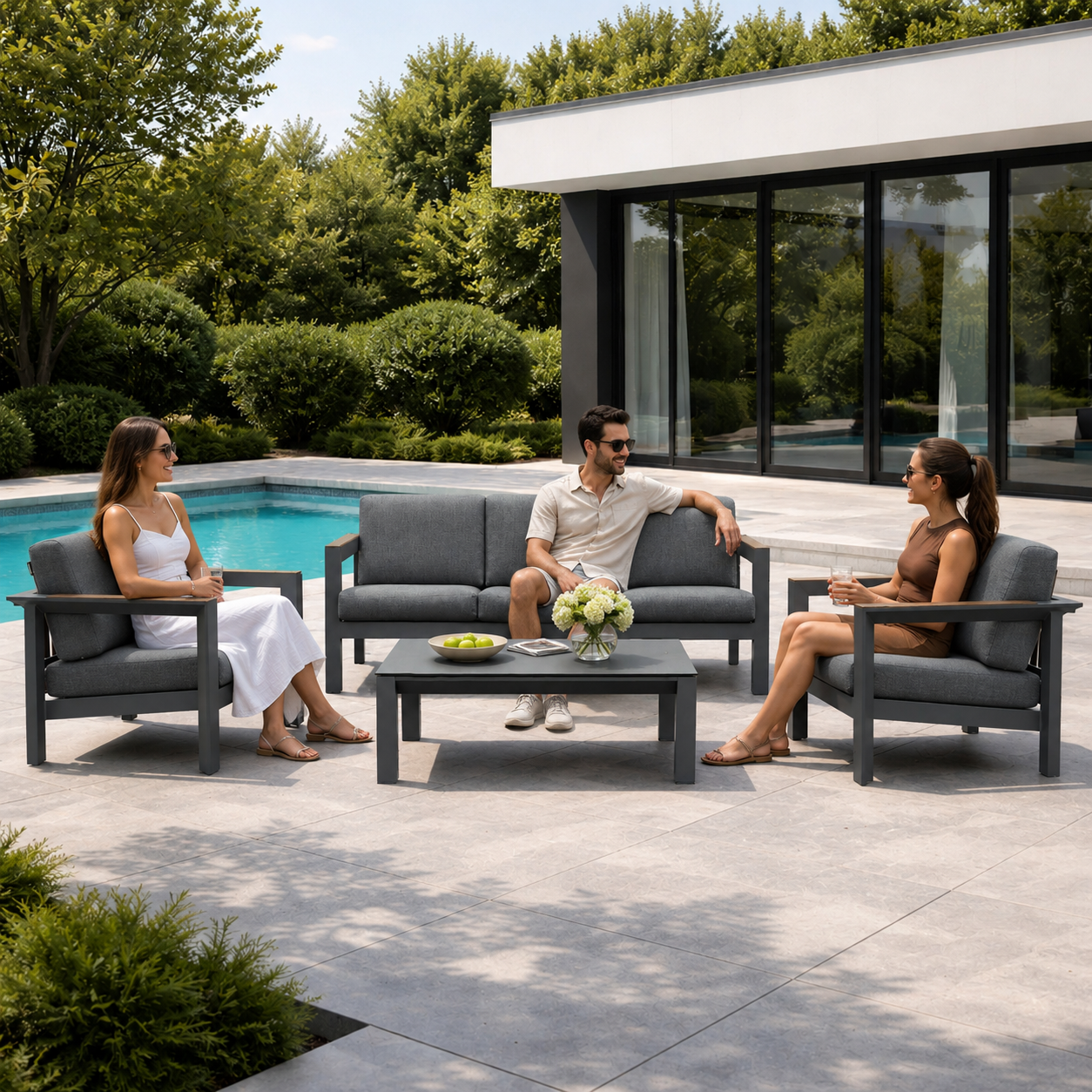
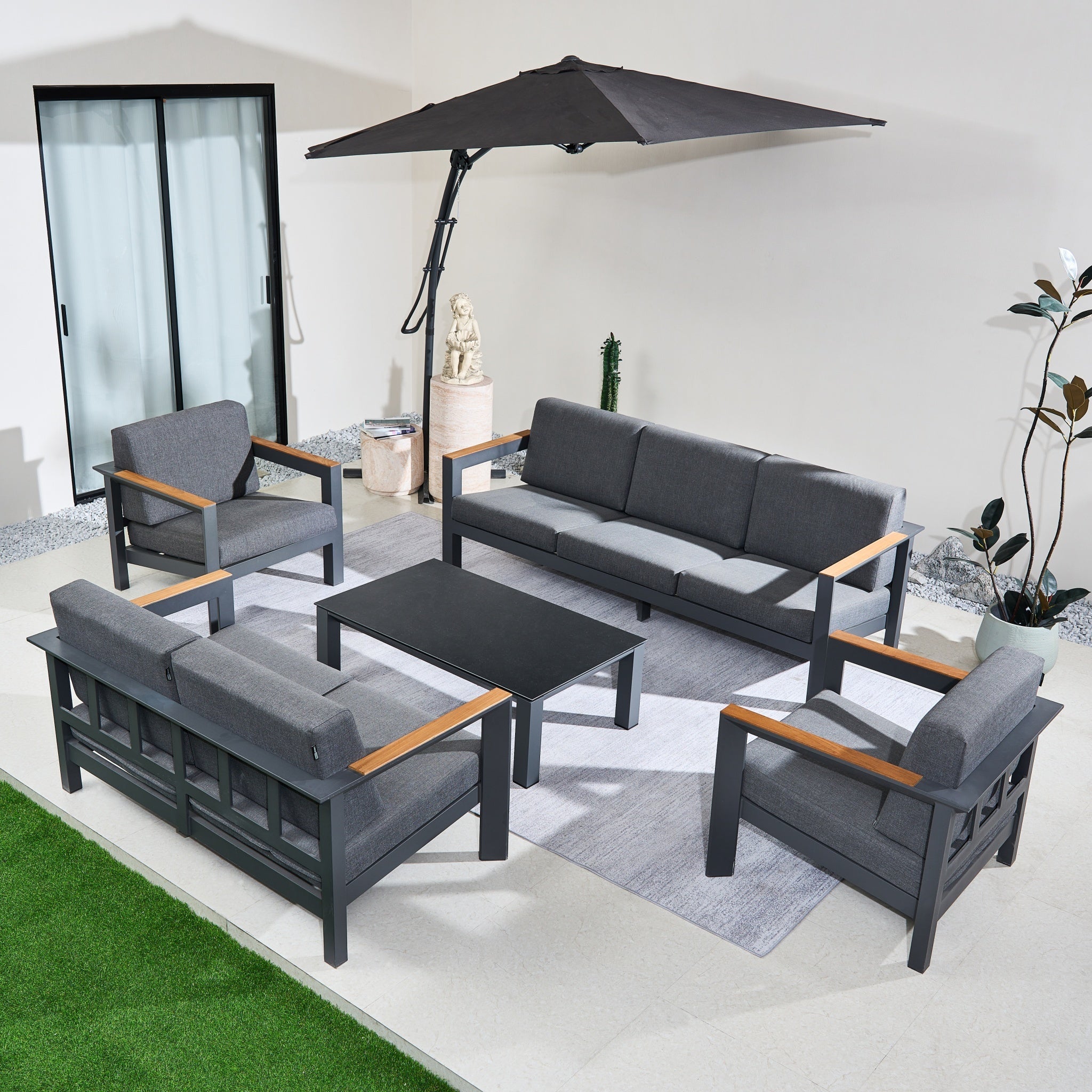
Begin with your garden’s main purpose, then choose furniture around that routine. A family who eats outdoors will benefit more from a dining table and chairs than a lounge arrangement. For relaxed reading or conversation, a sofa set can create a distinct seating zone. If you regularly entertain, consider whether guests need room to dine, gather or move between both areas.
Scale matters. A large garden can accommodate furniture for six to eight people, while a compact patio may feel crowded with a full dining set and separate sofa. In smaller gardens, choose one versatile centrepiece and keep other pieces light in visual weight. A compact bistro arrangement can support meals, while a bench or a pair of chairs creates a quieter retreat without filling the whole space.
Think about movement as well as capacity. Keep a clear route from the house to the garden, and avoid placing a chair where it blocks a gate or path. On a narrow terrace, a rectangular dining table may sit more neatly alongside the wall than a round one. A corner sofa can make use of an awkward edge, provided it doesn’t obstruct access to planting or doors.
Sun and shade also influence placement. A garden parasol can provide shade beside a dining area, while a sunny corner may suit loungers. Consider how cushions and other accessories will be stored when they’re not in use, especially if there’s little sheltered space. In a shared garden, define separate dining and lounging zones by orienting the furniture, rather than adding screens that take up valuable room.
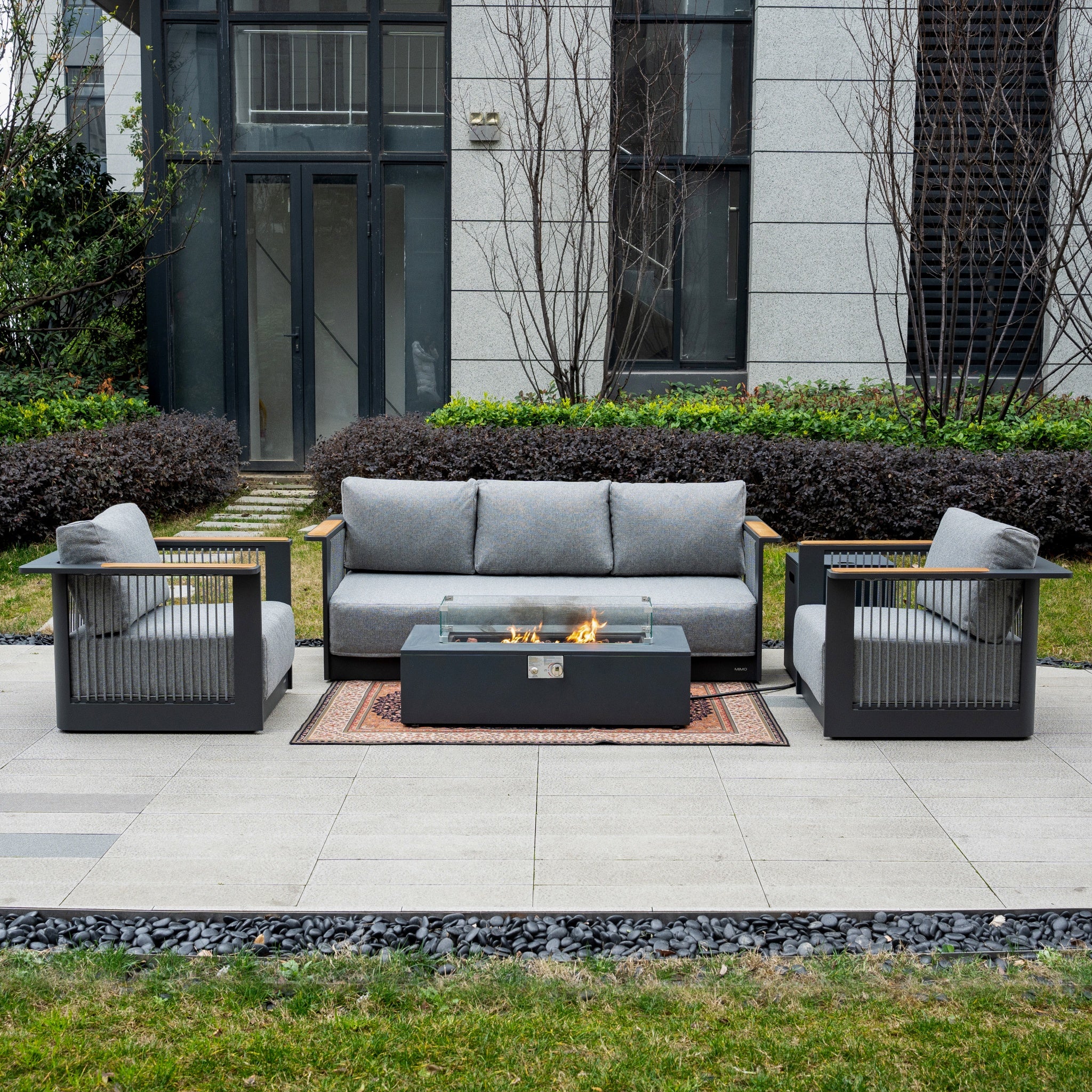
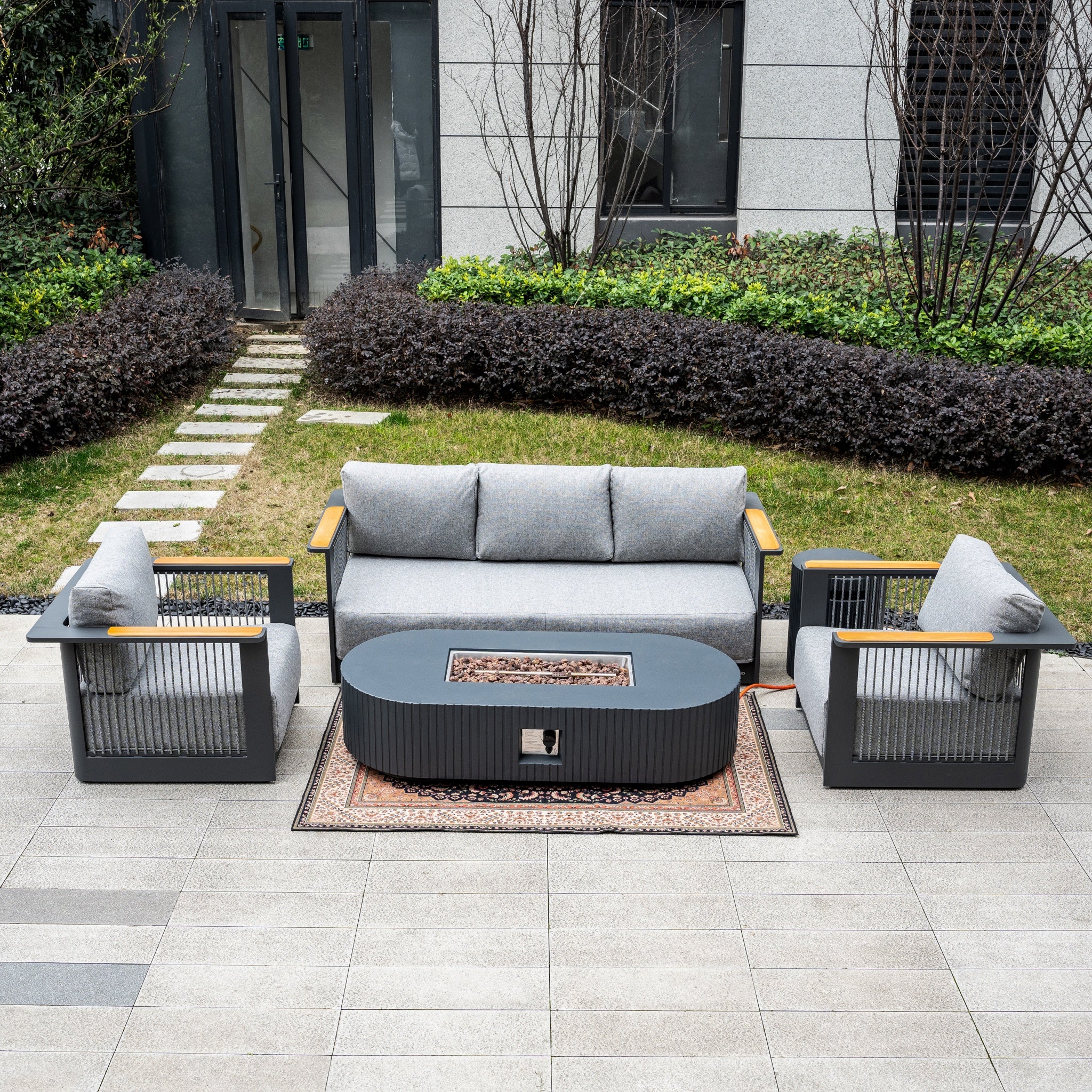
Before choosing a set, picture a typical day. Would you serve lunch outside, host friends for an evening meal or use the garden mainly to unwind? Let the answer guide the balance between chairs, sofas and tables. For flexible entertaining, a rising table can serve as a coffee table during relaxed gatherings and a higher surface for dining. A firepit table can create a focal point for conversation, while leaving comfortable access around the seating.
Warranty terms vary between UK garden-furniture brands, products and components, so there isn’t one standard duration for every set. Read the product’s written terms to understand what is covered, any exclusions and whether care requirements affect cover.
If you’re considering a layout that combines dining with lounging, contact MIMO Living to discuss your outdoor furniture plans.
3. Comfort, ergonomics and seating proportions
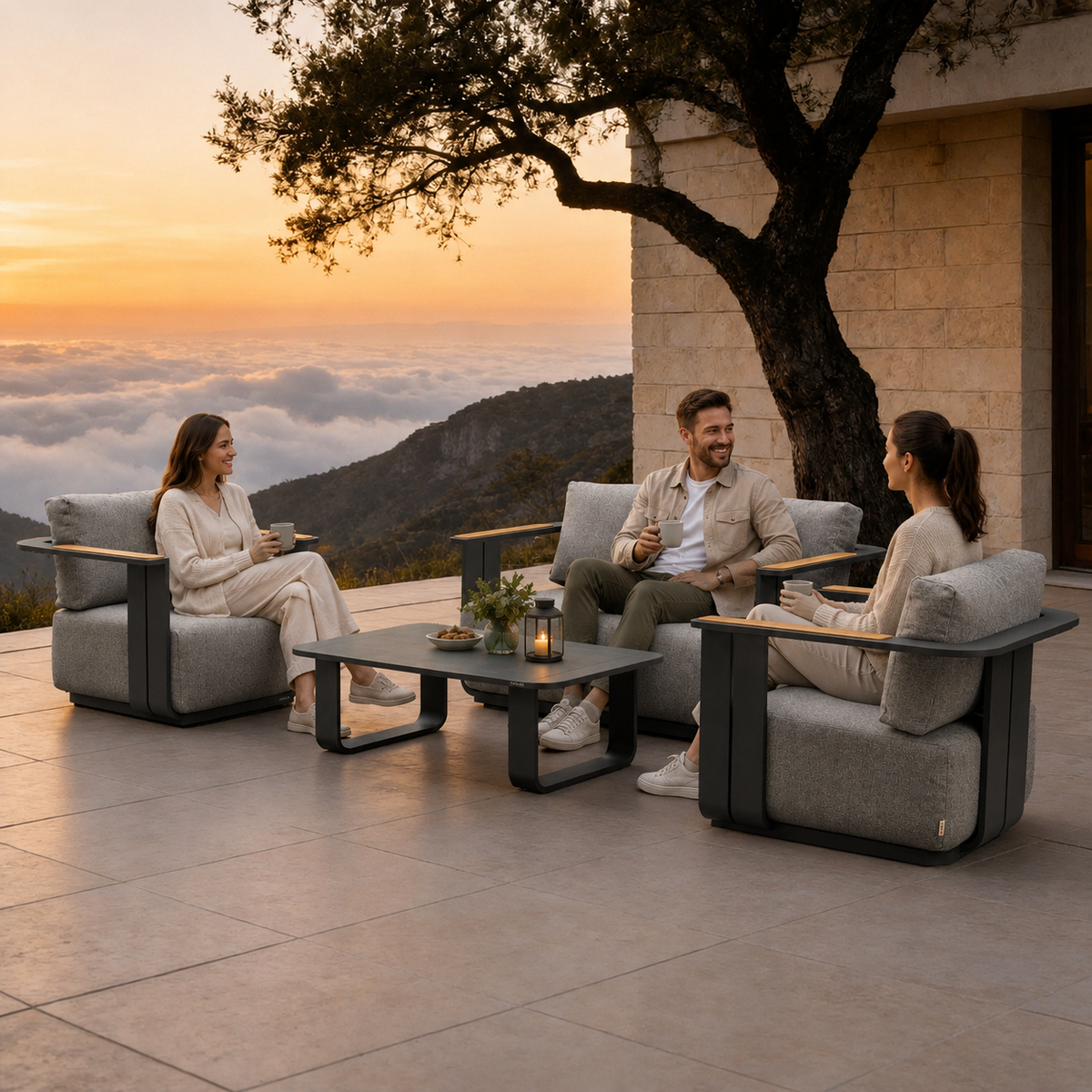
Comfort depends on how a seat supports your body and suits its intended use. For relaxed lounging, look for generous seat depth, a supportive back and arms positioned for resting. For outdoor dining, a more upright seat helps you sit comfortably at the table. Compare proportions in person where possible, and imagine using each seat for longer than a brief test.
Use a familiar chair at home as a reference. Notice whether your feet rest comfortably, your back feels supported and the seat lets you rise without effort. Then compare the garden seat’s height and depth with that experience. A deep sofa can feel inviting for reclining, but may be less comfortable if you prefer an upright posture.
Match the seating shape to how you relax. An outdoor corner sofa gives several people room to sit together, while a separate armchair can offer a more upright place to read. Check whether the corner section suits the left or right side of your intended arrangement. That detail affects how the sofa frames a view, doorway or garden table.
Table height also changes how comfortable a set feels. A low coffee table suits drinks and relaxed conversation, but it’s less practical for a meal. A dining-height table works for eating, with chairs that let you sit close without your knees hitting the underside. If you use one space for both, a rising table can switch between coffee-table and dining use.
Pay attention to cushions as well as frames. A supportive cushion should hold its shape under regular use, while removable covers can make cleaning easier. Consider how the fabric feels against your skin on warm days, and whether cushions stay in place when you shift position. Keep them dry and store them indoors when not in use, especially during damp weather.
Practical details can preserve comfort over time. Choose designs with replaceable cushions or covers where available, rather than relying on a single fixed component. Check how cushions attach and how the seat is supported beneath them. Loose fixings or uneven support can make a comfortable chair feel unstable, so inspect joints and contact points as part of your decision.
A useful test for how to choose outdoor furniture that lasts is to picture who will use each seat and how. A deep corner sofa may suit long evenings, while firm, upright chairs make dining easier. Prioritise proportions that support conversation, meals or quiet reading, so comfort feels natural for everyone.
4. Measuring outdoor spaces and planning their use
Start with a sketch of the garden, patio or terrace, marking fixed features such as doors, steps, paths, planters and drains. Measure the usable area rather than the whole garden, then note the position of walls, fences and changes in level. A tape measure and a simple paper plan can reveal whether a dining table, sofa or parasol will obstruct an entrance before you choose furniture.
Next, compare the product’s full dimensions with the space on your plan. Include the chairs pulled out from the table, not just the table’s footprint, and leave room to walk around the set. Draw the table and each chair in its pulled-out position. Check that someone can pass behind a seated guest and still reach the garden door or path without turning sideways.
Plan for how you’ll use the space. A dining area needs room for chairs to move and for people to serve food, while a lounging arrangement needs clear access to seats and a coffee table. In a narrow patio, place a rectangular table along one edge to preserve a route through the centre. On a broader lawn, position the seating to face a view or define a separate outdoor living area.
Small spaces benefit from pieces that serve more than one purpose. A compact table can support outdoor meals and drinks, while stackable chairs can be moved aside when you need open floor space. In a larger garden, a dining set and a separate sofa area can create distinct zones. Align their frames and placement with natural routes, rather than blocking the way between the house, lawn and planting beds.
Remember that the layout may change with the season. A summer dining area could sit in a sunny part of the garden, while a parasol needs room to open without catching a wall, branches or nearby furniture. Mark its position and base on your plan. If you intend to cover or store furniture during wet weather, leave access to the storage area and a route for moving larger pieces.
Before ordering, test the plan at full scale. Use boxes, folded blankets or masking tape to mark the furniture footprint on the patio. Walk the route from the house, pull an imaginary chair back and check whether doors open fully. This practical rehearsal can reveal tight corners and blocked paths that a scaled drawing may miss, helping you choose a layout that remains easy to use.
5. Choosing furniture for the British climate
In the UK, furniture faces rain, frost, damp, strong sunlight and fluctuating temperatures. Choose designs for the conditions where they’ll sit, not simply for their appearance on a dry day. An exposed patio needs weather-resistant frames and finishes; a sheltered terrace can accommodate more delicate materials. This distinction helps create outdoor living spaces that remain practical through changing seasons.
Powder-coated aluminium is a useful choice for an exposed dining or lounge area. It resists rust and can withstand rain, heavy snow and blustery wind. PE rattan is also weather resistant, though frame construction and weave quality still matter. Natural weather resistance doesn’t remove the need to care for timber. Decide whether you’re willing to maintain a wood finish as it weathers.
Winter protection depends on the material and how exposed the furniture is. You don’t need to bring every frame indoors, but a breathable cover during the wettest months helps protect furniture. Clean it in autumn, dry it thoroughly, then cover or store it. Avoid covering damp surfaces, which can trap moisture against the frame or fabric.
Cushions need particular attention in the British climate. Bring them indoors or place them in a storage box when they’re not in use, especially during wet spells. Ensure they’re dry before storing them for winter. If the furniture stays outside, keep cushions separate from the frame and store them somewhere dry. This makes it easier to use the seating again when the weather improves.
Material choice should also reflect how sheltered the space is. Cane and indoor-outdoor weaves suit conservatories, garden rooms and covered terraces rather than full exposure to the elements. A sunny, uncovered patio calls for materials better equipped for rain and UV exposure. Where strong sunlight reaches a dining space, consider a garden parasol for shade, leaving enough clearance around the table and chairs.
Plan maintenance around the seasons: clear leaves and debris, clean surfaces, and check fixings before storing or covering furniture in autumn. After winter, inspect frames and finishes before setting out cushions. A little seasonal attention helps you spot small problems early and keep outdoor spaces ready for relaxed dining or lounging. The takeaway is simple: choose for exposure first, then protect cushions and furniture during prolonged wet weather.
Before choosing a cushion set, check whether its cushions are waterproof rather than assuming the fabric will cope with wet conditions. When they’re not in use, bring outdoor cushions indoors or put them in a storage box to help protect them from damp. This also makes storage decisions clearer when the weather turns wet.
For winter storage, consider covers for the cushions as well as a dry place to keep them. Check whether the cushions are waterproof and plan how to protect each one before winter arrives, so your storage routine suits the conditions where the furniture is kept.
MIMO Living: Outdoor Corner Sofa Sets
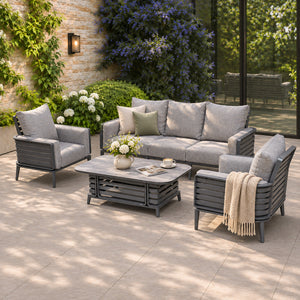
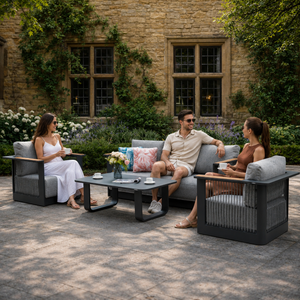
MIMO Living offers outdoor corner sofa sets that create a defined, comfortable place to relax and entertain. They can make use of a garden corner while bringing seating together around a shared space. Before choosing, compare the set’s dimensions with your measurements and leave room to move around it.
If you’re planning outdoor dining as well as lounging, MIMO Living also offers Sofa Sets with Firepit Table, Sofa Sets with Rising Table and 6-Seater Dining Sets. Choose according to how you use your garden, whether that’s gathering for conversation, enjoying flexible table space or sharing meals outdoors.
Explore the Outdoor Corner Sofa Sets to consider how they could suit your layout. Contact MIMO Living or visit mimo-living.com to take the next step.
Shape an outdoor setting you’ll enjoy season after season
A thoughtful answer to how to choose outdoor furniture that lasts begins with the atmosphere you want to create. Picture how you’d like to welcome guests, enjoy a quiet moment or make the garden feel more connected to home. This vision can guide choices that feel personal as well as practical.
As you plan your next step, consider what would make the space more inviting for you. Perhaps it’s a softer place to unwind, a setting for outdoor entertaining or a detail that brings greater harmony to the patio. Let your preferred way of spending time outside shape your choices.
MIMO Living can help you explore premium outdoor living options with your garden and lifestyle in mind. Browse our outdoor corner sofa sets and choose a setting that feels right for your space.
Frequently Asked Questions
How do teak, aluminium, steel, rattan and plastic garden furniture compare for lifespan and maintenance?
Teak can remain serviceable for many years with care, though its colour weathers unless treated. Aluminium is light and rust-resistant, so it generally needs less upkeep than steel, which can corrode if its finish is damaged. PE rattan is a low-maintenance synthetic weave; inspect the frame and weave quality. Plastic varies by construction, so assess its stability and finish rather than assuming every piece will last equally well.
What weather-resistant features should I look for in outdoor furniture?
Look for a powder-coated aluminium frame, weather-resistant fabric and durable joints suited to where the furniture will sit. For example, a dining set on an exposed patio needs a frame and surfaces that cope with rain, while cushions should be easy to remove and store. Check that the product description identifies materials clearly, and consider whether the finish, weave and cushion fabric suit your garden’s exposure to sun and damp.
How can I check the quality and construction of garden furniture before buying?
Inspect the underside and corners, where weak joints or uneven support can be easier to spot. Look for secure fixings, steady legs and a frame that doesn’t wobble when gently pressed. On wooden furniture, compare timber thickness and the support beneath the seat; on woven pieces, check for consistent, firmly secured strands. Clear construction details help you judge robustness, while precise care instructions show what upkeep the materials need.
What outdoor furniture materials resist rain, frost, UV and coastal conditions?
For rain and frost, powder-coated aluminium and PE rattan are practical options, while hardwoods such as teak and acacia offer natural weather resistance. UV exposure can affect finishes and low-grade weave, so look for materials described as UV resistant. For coastal gardens, marine-grade polymers can withstand salty air. Match the material to the conditions it will face, and protect cushions separately during prolonged wet weather.
How much does durable outdoor furniture cost in the UK?
There’s no single price: material, construction, size and finish all affect cost. Compare these features alongside each material’s care requirements rather than judging by appearance alone.
- Posted in:
- garden furniture
- garden styling
- how to choose outdoor furniture that lasts
- luxury garden furniture
- outdoor dining sets
- outdoor living
- outdoor sofa sets
- patio design
- weather-resistant furniture